Texas high school football is more than a sport—it’s a cult. From Amarillo to Brownsville, fans gather in their home-town stadiums for the Friday night season opener wearing jackets or T-shirts, depending upon location. My earliest memories of this event were as a young boy, sitting in a packed stadium with my dad, awed by the excitement.
Back then, a prayer was offered just before the start of each game. I remember how everyone stood, how each man removed his hat, and the silence of the hushed crowd. And during the prayer, I also remember thinking, We’re all praying together but which person is God listening to? I’m sure the correct answer back then would have been equally baffling: “Everyone’s prayer.”
Similar thoughts may haunt you. Perhaps you struggled during a funeral or other crisis, and you needed His touch. You prayed and prayed, but nothing happened—as if God never heard. Eventually, you assumed He must be listening to others more worthy than me. Those thoughts are fiery darts from Satan (Ephesians 6:16) intended to crush your spirit.
I teach a section in the Science and the Bible lectures entitled, “The Character of God.” We examine scientific discoveries from the past century that reveal amazing details about God’s nature—His eternal presence (omnipresence), His incredible power (omnipotence), and His amazing knowledge (omniscience). Details of these discoveries and their complex equations are vastly beyond the scope of this blog and its author; however, they provide glimpses of God that surpass comprehension and highlight His very nature, as per Romans 1:20-21.
Part 1 of this blog provides the historical foundation for how science revealed God’s “omni-presence” (Gk: “omni” – all, completely, entirely; hence, “all-present” or “everywhere-present”). This concept of an “everywhere-present God” warps our mind. How could science possibly defend this characteristic of God? The answer lies within the atom . . . sometimes you must look small to appreciate the gigantic. Let’s look further and address my fooball stadium question.
(This discussion will likely go well beyond the interest of some readers—or more bluntly, it may be terribly boring—but please hang with me. It is important, and you’ll see why.)
* * *
Over 2000 years ago, the Greeks first proposed that “atoms” were the smallest particles into which a material such as gold could be divided. By the 20th century, physicists had discovered that the atom is much more complex than the Greeks ever imagined. It includes a nucleus at its center. The nucleus contains protons (each with a positive charge) and neutrons (with no charge). It also contains a “shell” of negatively-charged electrons that orbit the nucleus. (Today, the models require “clouds” of electrons. See Figure 1; Wikipedia, 20191). And physics-based theory at the atomic level was about to explode.
Dazzling scientific brilliance illuminated the early 1900’s as astounding work by some of the smartest brains in the world changed our concept of the physical universe. Albert Einstein published his famous Theory of Special Relativity equations in 1905 which included his familiar equation, E=mC^2. The equation states that energy and mass are interchangeable. His Theory of General Relativity, published in 1915, demonstrates that time and length (or distance) are also interlinked.2
Erwin Schrödinger and Werner Heisenberg developed their theories of quantum mechanics in the mid-1920s. These equations demonstrated that atoms behave as both waves and particles.3
Paul Dirac combined Einstein’s Special Relativity equations with the quantum theory equations and published his paper The Quantum Theory of Electrons (1928), and later published his Theory of Electrons and Protons (1930). His equations had two solutions—one described the electron, and the other a “negative energy electron,” later referred to as a “positron”. Dirac’s equations predicted that the positron was identical to the electron, yet with opposite properties—an “anti-matter sub-atomic” particle—predicted and yet never observed.3 Was it even real?
Carl Anderson built the first cloud chamber in 1932—a small metal cell (container) saturated with water vapor. Ionized (charged) particles that passed through the chamber would interact with the water molecules, ionize them, and leave a “jet-trail” trace. Although others had found indirect evidence of Dirac’s “positron,” Anderson searched in earnest for the particle itself.4
The cloud chamber was modified to confirm the particle’s existence. A lead plate was inserted into the cell and an electric (magnetic) field was applied. According to theory, the positron should pass through the lead plate and curve away in a direction opposite to the electron. In 1932, the positron was discovered (see Figure 2).
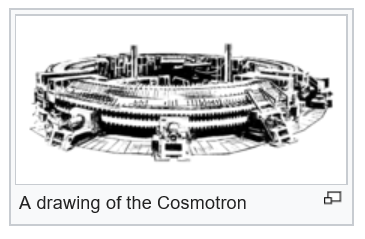
These events probably seem dull and boring and you’re probably thinking, So what? But the results had astounding implications. The discovery demonstrated that over 30 years of equations and numerical theory were correct—the atom was made of even smaller particles than those yet discovered. The first, high-power “atom smasher” was completed in 1953 (The Cosmotron, Figure 3; Wikipedia, 20195). It accelerated protons to half the speed of light and crashed them into other atoms. The collision shattered the atom and revealed other smaller particles. Much stronger “particle colliders” have since been developed that accelerate and hurl a heavy gold ion into another atom at thousands of times more energy than the Cosmotron. This collision energy, compared to the early proton accelerators, is like comparing a spit-ball to a M-198 howitzer (cannon) shell. Over 50 different particles and forces are known today.
Finally, in the 1990’s and early 2000’s, even more complex and unfathomably difficult equations were derived that defined even smaller particles, termed “strings”. String theory is currently being advanced and tested. These equations begin to link the particles with major forces such as gravity.
* * *
So, why did I just spend a page of this blog discussing historic discoveries in particle physics? Because the equations are unlike anything we ever experienced in high school trigonometry or college calculus. They require at least 10 space-time dimensions to describe the physical aspects of the atom. And, since God created the universe and it reflects his attributes (Romans 1:18-23), and the Creator must be more complex than the creation, we just stumbled upon an attribute that helps us visualize God’s omnipresence—the recognition of multi-dimensionality.
Let’s take a moment to review some basic concepts of geometry that many of us did experience in high school. The basic dimensions are defined below.
0-Dimension – a point

1-Dimension – a line or segment

2 -Dimensions – a plane

3-Dimensions – a cube

This seems straight-forward. Now try to visualize a 4-dimensional cube . . . rather difficult, correct? We struggle to comprehend a fourth space dimension, and yet, the mathematical equations and physical observations tell us that 10 dimensions exist.
Why is it essentially impossible to grasp a fourth space-dimension?
Because God designed us as three-dimensional beings to live in a three-dimensional world with one time dimension. We can easily grasp three-dimensional space because that’s who we are (and we all move along a single direction of time—a one-dimensional “timeline”).
So, let’s tie this together. Science tells us that 10-dimensional math is required to numerically describe the atom. Logic states that the Creator God must be at least as complex as His creation. Hence, we worship and “know” a 10-dimensional God, and yet we fail to grasp the significance of even a fourth space dimension.
But there is hope! Geometry can help us appreciate a multidimensional, omnipresent God if we move the other direction. In other words, we subtract a dimension from our 3-D world and visit the two-dimensional neighborhood of “Flatland.” The amazing significance of a one-dimensional change is a humbling experience, especially when you consider that God occupies 10 (+)-dimensional space—if He’s even confined to dimensions
Follow me now to Part 2. Once in Flatland, we can easily visualize how our advanced, three-dimensional “omnipresence” overwhelms the residents of that strange and depthless land.
1Wikipedia, 2019. Atoms: https://en.wikipedia.org/wiki/Atom
2Wikipedia, 2019. The General Theory of Relativity: https://en.wikipedia.org/wiki/General_relativity
3Wikipedia, 2019. Quantum Mechanics: https://en.wikipedia.org/wiki/Quantum_mechanics
4Wikipedia; 2019. The Positron: https://en.wikipedia.org/wiki/Positron
5Wikipedia, 2019. The Cosmotron: https://en.wikipedia.org/wiki/Cosmotron
Figure 1. Modern representation of a helium atom.
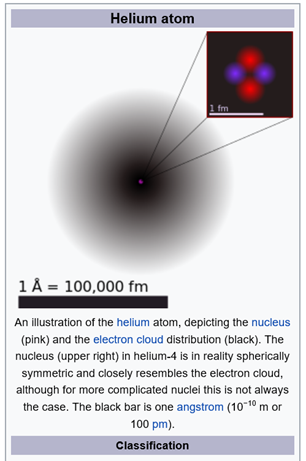
Figure 2. First photograph of a positron track by Carl Anderson, 1932.
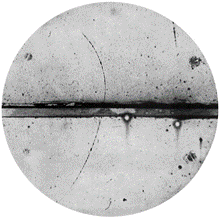
Figure 3. The first high energy “atom smasher” – the Cosmotron.