I left you hanging in Part 6.
I initially stated that we would review the fossil record from about 4.1 Bya (billion years ago) until about 0.6 Bya—a period of about 3.5 By. We discussed the discovery of stromatolites (single cell communities of Cyanobacteria, a.k.a. “blue green algae) in Western Australian rocks dated at about 3.5-3.4 Bya. Eukaryotic, single-cell, green algae appeared in the fossil record at about 3.0 Bya. (The cell nucleus and organelles are enclosed within a membrane of a “eukaryotic” organism). Single-cell life-forms were prokaryotic (DNA and organelles were not membrane-enclosed) prior to 3.0 Bya. I stopped at that point, without advancing to 0.6 Bya, in order to emphasize the following.
Single-cell bacteria seemingly appeared in an instantaneous event as soon as the Earth became habitable approximately 4.1 Bya. However, very few evolutionary advancements are evident within the fossil record over the next 3.5 By (until about 0.6 Bya). One wonders, could no other organisms evolve in the increasingly oxidizing oceans during that vast amount of time? Where is the gradual, progressive, evolutionary change that Charles Darwin envisioned in his Origin of the Species?
This is another example of the conflicts between the evolutionary claims four decades ago at Texas A&M versus, in this case, my understanding of the fossil record as it exists today. And yet, many sincere, Christian scientists believe that God’s handiwork is beautifully expressed through an evolutionary progression of life. I’ll address this further in two more blogs. For now, let’s continue to examine the fossil record and its evidence, pro or con, regarding evolution in more recent settings. Once again, I’ll speak as a geologist using geological terminology; and I’ll reference great ages of billions of years before present.
The Pre-Vendian Era
As recently as 0.8-0.7 Bya, Pre-Cambrian strata were devoid of multicellular organisms. Two contemporaneous locations contain fossils from this period. These locations are important because they show the status of life after its origin almost 3 By earlier. We’ll briefly examine each, below.
Bitter Springs Formation, Australia. It seems once again that if you are interested in Pre-Cambrian rocks, Australia is the place to be! The Bitter Springs Formation is exposed in central Australia within the Amadeus Basin. Its age is 0.85 Bya and younger. The locality is unusual—flint and chert nodules (silica—thinly sliced and magnified) within the formation contain extremely well-preserved specimens of ancient flora from this period. Listed below are excerpts (from UC Berkely) that describe the specimens. Figure 1 shows microphotographs of the fossils.
The microfossils of Bitter Springs are amazingly well-preserved. Thin sections of fossiliferous chert make it possible to view their three-dimensional morphology…they show that the cyanobacteria were present in morphologically modern forms and were quite diverse from an early date. With additional evidence demonstrating that stromatolites are the products of cyanobacterial activity…Perhaps cyanobacteria are simply successful in the forms they acquired early in their evolution, or perhaps they possess some mechanism of genetic stability which has caused them to remain physically unchanged since that time…it was at Bitter Springs that the first convincing evidence of early eukaryote fossils was found…they were assigned to the green algae. While it is possible that the inclusions are artifacts of preservation, other lines of evidence, such as molecular sequence data, have established that eukaryotic cells had evolved by this time.1
Cyanobacteria, green eukaryotic algae, and stromatolites—sound familiar? This publication references an older (1992) article that describes the Bitter Springs locality. Since then, fossil discoveries at other locations (see above, and Part 6) have identified these organisms in rocks from at least 2 By earlier.
Belt Supergroup Series (MT). The Belt Supergroup Series is a massive geologic section in western Montana that includes over 50,000 ft of sediment in some areas. The section dates from about 1.6 to 0.8 Bya and represents massive sediment deposition in an ancient rift system along the Cordilleran miogeoclinal margin during the Rodinia supercontinent breakup. The age of the younger sediment overlaps with the Bitter Springs Formation.3 Fossils are sparse in the Belt Series rock. The text below describes the fauna:
Hence, the stromatolite fossil assemblage is consistent with fossils from the Bitter Springs Formation. Again, the great enigma for me is the lack of evolutionary progress over the next 3.5 to 4.0 By—even if it should be expected. And I am not alone—the evolutionary biologists acknowledge it:
And that leads us into our final section.
Ediacaran (and Vendian) Period
The Cambrian Period is unique. “Cambrian” means “life.” Life exploded with the advent of the Cambrian—but what life forms were present shortly beforehand? Did new creatures suddenly appear that provided the amazing diversity we see in the Cambrian?
We were taught at Texas A&M that the Cambrian Period began at 0.6 Bya (600 million years ago). The first multicellular creatures suddenly appeared in rocks of this age across the globe. The Ediacaran Period began earlier (635 Mya); whereas the Vendian is a sub-unit within it and specifically recognized for its large assemblage of simple, multicellular organisms. The Ediacaran/Vendian period ends at about 539 Mya—which marks the onset of the Cambrian Period (Figure 2).5
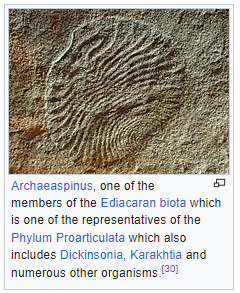
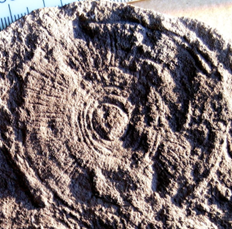
So, what was so unusual about the Vendian? It’s the fossil biota in the rocks that include images and impressions of a wide range of simple, multicellular organisms. Some are vaguely similar, but far removed from today’s jellyfish and coral-type animals. Many others are unique—unlike anything we see today (Figure 3).
You may be asking, “Isn’t that exactly what the evolutionists would predict in advance of the Cambrian?”
Great question, but now I’ll share the rest of the story—one that is not exactly a favorite topic within the evolutionists’ camp.
From this point forward in the fossil record we see huge swings in the types and diversity of organisms. Each major swing, however, is preceded by a massive extinction event in which 50-60% and perhaps 80-90% of the extant organisms simply disappear. And the same event marked the end of the Vendian period. This event is described below:
Notice that the “relationships” are still under debate. That’s because those debates often involve discussions by evolutionists regarding what, if any, evolutionary progress fueled the Cambrian Explosion (i.e., the “relationships” that might have evolved into future species). It is also explains why the age of the Cambrian is now 539 Mya instead of the 600 Mya date we were provided at Texas A&M.
The following quote from J. Clayton6 sums up the Vendian enigma.
And that, in turn, leads us to the amazing Cambrian Explosion in our next blog, and to a few verses from Genesis that I believe is the true Scriptural description of its origin.
1University of California (Berkeley), Bitter Springs Formation, Australia: https://ucmp.berkeley.edu/precambrian/bittersprings.html
2Trippe, R. (2019) A Record of the Precambrian-Cambrian transition in SW Montana: A Late Neoproterozoic to Early Cambrian Stratigraphic Windwo, Fortunian Biostratigraphic Assemblage and Treptichnus Pedum; University of Montana, Missoula (MT); MS Thesis.
3National Park Service; Glacier National Park; Geologic Formations; https://www.nps.gov/glac/learn/nature/geologicformations.htm
4Wikipedia: Ediacaran Biota; https://en.wikipedia.org/wiki/Ediacaran_biota
5Wikipedia: Ediacaran; https://en.wikipedia.org/wiki/Ediacaran
6Clayton, J. (2001) The Source; Howard Publishing Co. Inc., 278 pp.
Figure 1. Two different species of Cyanobacteria identified within chert/flint nodules from the Bitter Springs Formation, AU.

Figure 2. Stratigraphic scale of the geological divisions leading up to the Cambrian Period. The left-hand scale with negative numbers are the years before present (in millions).
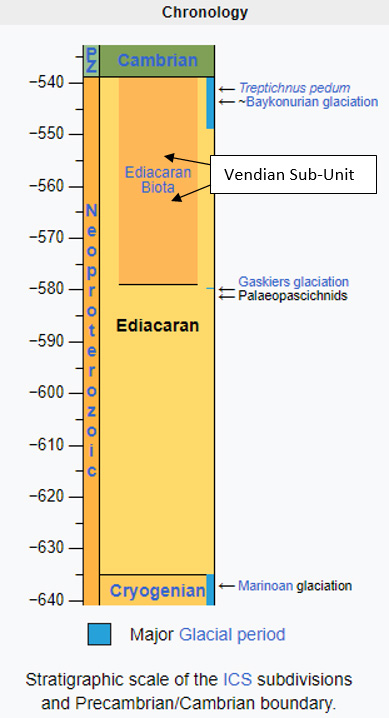
Figure 3. Photographs of several Ediacaran creatures. Most have no counterparts today.4