
In the previous blog (Blog #39) I addressed how time is related to light, its wavelength, and frequency using a simplified version of our rocket ship example. We learned that a dramatic increase in the velocity of our frame of reference “stretches out” the wavelengths of light, resulting in a dramatic decrease in light’s frequency from our perspective. Since the speed of light is constant, the decrease in frequency (the number of wavelengths that pass us by) must be equated with a proportional reduction in the passage of time. Hence in our example, we would experience the passage of only .01 second aboard the rocket for every one second that passed on Earth. The passage of time is 100 times slower than upon Earth.
I concluded by noting that both velocity and gravity act upon one’s frame of reference to slow the passage of time, but that a third mechanism also exists. This mechanism is responsible for the red-shift observations described by Edwin Hubble (Blog #17). The expansion of space itself drives the red-shift instead of the recessional velocity of the galaxies from Earth as Hubble proposed. And yet when reviewing scripture, and specifically Genesis 1, each creation day could be interpreted as 24-hour periods with no feasibility (or support) for a red-shift.
This leads us to the question: “Is the description of “yom” in Genesis 1 with its associated evenings and mornings merely God’s introduction to the concept of time on planet Earth from which all other mentions of time are derived, or is something else involved?”
Let’s begin with a review of God’s descriptions of the passage of time.
Time and Its Passage—Scriptural Examples
I’ve acknowledged God’s use of the Hebrew term “yom” in the Genesis 1 creation account as “day” since the earliest blogs. And, given the association of “yom” in Genesis 1 with the common Hebrew terms for “sunrise” and “sunset,” its translation as a 24-hour day seems reasonable. However, we’ve also flagged the discrepancy between six literal, 24-hour creation-week days and the billions of years observed in God’s creation. Schroeder addresses this apparent inconsistency as his first “Golden Apple” in the Time Dilation model.1 Consider the following:
- In 2008, the Jewish biblical calendar reached the year 5769. The start date was based, 2000 years ago, upon the generations of mankind as listed in the Bible since Adam, and the time thereafter. The start date did NOT include the six days of creation.
- In a simple, unbiased reading of the flow of events and the flow of time in Genesis 1 versus any other biblical text thereafter, time is divided into two categories: the first six days of creation and all time thereafter.
- During each of the six days a list of events is described, and then we are told that a day (a.k.a. the “yom”) had passed. There is no reference of time within the specific flow of events. For example, we are not told on the third day that water was separated from land at 9:30 a.m., and that plant life appeared at 3:30 p.m. Rather, these major events were simply listed and we are told “a third day” had passed. In contrast, all major events post-Adam define the flow of time. The passage of time is firmly tied to the event being described.
- Radioactive dates (from age-dating methods) agree very closely with the historical dates from Adam forward. Radioactive dates pre-Adam become increasingly older than the six-day Genesis 1 account.
- Time itself is Biblically defined and divided between the initial six-day period, and then for all time thereafter as two separate events:
- Genesis 2:4:
These are the generations of the heavens and the earth when they were created in the day that the Eternal God made earth and heavens.
The six creation days define the passage of time in which the cosmos was created– they are universal.
- Genesis 5:1:
This is the book of the generations of Adam in the day that God created Adam.
We live today in the timeframe of Adam and his generations— an Earth-based frame of reference
Note that Schroeder is NOT discounting a 24-hour, six-day creation period. However, he is noting a difference in the accounting of time between the two periods. Accounting, as in two different frames of reference!
Time Dilation and the Red-Shift
In my earlier blogs [Creation Event (Parts 2 and 3) Blogs #22 and #23, and Creation Models (Old Earth Day 1) Blog #35] I described the creation event as viewed through the eyes of astrophysicists in the Old Earth Model—the “Big Bang” as they refer. I also shared that the moment God spoke (“barah”) the “heavens and earth” into existence, it included the four primary entities of our universe: mass, energy, time, and space.
The Old Earth Model was mostly accurate in those statements, except for about one microsecond (one millionth of a second) regarding mass and time (Figure 1).2 Prior to that moment, the universe included only unfathomably hot plasma and space. Once the temperature ‘cooled down’ to about 3×10¹² degrees K (3 trillion degrees, Kelvin), the first stable matter, “quarks” formed in an event termed “quark confinement,” and time began. The transition to quarks was complete at about one microsecond after the creation event.3
We know the frequency of that radiant energy from today’s measurements in physics laboratories (ion colliders, etc.). The frequency was about a trillion-fold smaller than its residual microwave radiation measured today. In other words, the frequency (wavelength) of that early radiation has been “stretched out” a trillion times by the expansion of space into the microwave frequency range. This residual energy is the Cosmic Microwave Background Radiation (CMBR) discovered by Noble Prize winners Penzias and Wilson (see Blogs #22 and #23). The stretching of space also stretched visible light into the red frequency range to produce the “red-shift” observed and measured by Hubble.
And, as we observed above, a trillion-fold stretch of frequency requires a trillion-fold decrease (slowing) of time.
So, where does this lead us?
God, the Universe, and Time Dilation
Let’s briefly return to our original rocket ship example. Earth-based time was the original frame of reference. The traveler’s frame of reference aboard the speeding rocket slowed down by a factor of 400 times. The traveler spent 50 years on the rocket while 20,000 years passed on Earth.
God clearly chose mankind’s frame of reference (from Adam onward) to account for the passage of time. We live and exist today within that frame of reference. But did God’s chosen frame of reference really start with Adam? Could it have begun earlier during days 1-6? Or, perhaps at the very moment of creation itself?
By studying God’s creation (Romans 1:18-21) we learn that the original radiation frequency was stretched one trillion times by the expansion of space; hence, the passage of time throughout the universe must have slowed by one trillion times during Days 1-6! And, if God chose mankind’s frame of reference to account for time since the very beginning of the universe, then Days 1-6 must be corrected into God’s/mankind’s frame of reference to account for the expansion. (In other words, the universe was on the speeding rocket during Days 1-6, where wavelengths are stretched and time is dramatically slowed). To make the correction, we divide the age of the universe (assumed by Schroeder to be 15 billion years)4 by the one-trillion stretching factor, and we get an amazing result:
6 DAYS!
In other words, from God’s perspective using the Earth-based frame of reference from Adam-forward, the passage of time during creation days 1-6 was six, literal 24-hour days, while the passage of time within the universe’s frame of reference was approximately 15 billion years. Schroeder makes the following quote4 that seems particularly noteworthy:
If the universe had been any other size, temperature, or mass, or the threshold temperature of matter (protons and neutrons) had been different, this relationship would not exist. Cosmologists are in awe that the mass and the energy of expansion of the universe are matched with the “incredible fine-tuning” of one part in 10120. It is almost as if the values had been selected. Perhaps they have. Genesis and science are both correct. When one asks if six days or fifteen billion years passed before the appearance of humankind, the answer is “yes.”
It depends upon the frame of reference.
Some may say that the relationship between astrophysics and Genesis 1 is simply fortuitous on a grand scale. That’s about the only option I can imagine for those who choose to ignore and/or reject God. However, if you find yourself in that latter group, Schroeder describes one other aspect of the Time Dilation model that is equally profound.
We just discussed how the length of each creation day was 24 hours from God’s perspective using a post-Adam frame of reference. If, however, you were on Earth during the Genesis 1 creation period, you would have experienced days of very different lengths that also point to God.
Creation Days 1-6 – The Universal Perspective
The final blog of the Old Earth Model series [Creation Models (Old Earth_Days5_6; Blog #37)] included a graph that contrasts the Old Earth and Young Earth days on a linear scale (reproduced in Figure 2, this blog). The beginning and end of each Old Earth “Day” were based upon the events of that “Day” as defined in Genesis 1, and from their estimated ages determined by scientific studies of God’s creation (i.e. Romans 1:18-21). The age and duration of some events (especially the atmospheric stabilization on Day 2) include great scientific uncertainty and hence, the length of Day 2 (and Day 4) are weak estimates, at best.
A few observations stand out with only a brief review of Figure 2 (remember, Day 2 is anomalous):
- The “Days” of Genesis 1 progressively shorten throughout the creation week ;
- Day 1 is extremely long and covers about half of the age of the universe; and,
- Days 5 and 6 (especially Day 6) occupy only tiny fractions of the linear timeline.
So according to the Time Dilation model for the 15-billion-year-old universe, how long were each of those six creation days? The following paragraphs attempt to summarize Schroeder’s mathematical derivation of the lengths of Days 1-6. You may find it vastly uninteresting. Please persevere; but if nothing else, review Figure 4 (introduced and discussed below) and note the calculated lengths of Days 1-6 as compared to their respective ages based upon scientific observations.
Schroeder points out4 that shortly after the creation event, the universe was “packed” into an incomprehensibly tiny space with unfathomable energy. The radiation frequency was a trillion times greater than today, and hence, the passage of time was extremely fast. The inflationary expansion of universal “space” also occurred at a vastly greater rate. But with each “doubling” in size, the stretching of radiation frequency slowed the passage of time by a factor of two (i.e. one-half of what it was previously).
You may not grasp the mathematical significance of this trend, but it reflects an “exponential” or “non-linear” rate of change for the expansion of the universe and the slowing of time. (You may remember “exponential” equations from high school or college algebra.)
If universal expansion was following a non-linear process over 15-billion years, then it would be incorrect to simply divide 15-billion years by “six” to determine the average length of the six creation days. Rather, an exponential equation must be used. But which one?
Schroeder devotes a full chapter5 to his modification and application of the Bernoulli equation to solve the problem. (I’ll spare you the agony of his derivations and application—I’m not a mathematician, but for those of you who might be interested, see his Chapter 4.) Both Bernoulli and Fibonacci equations have been applied to correctly model numerous spirals found in nature (see natural examples in Figure 3). Schroeder applied the Bernoulli equation to a 15.75-billion-year-old universe to determine the non-linear duration of Days 1-6. His results are presented in the upper plot in Figure 4 as perfectly proportioned creation “days.” Notice how closely the Time Dilation days fit the Old Earth “days” and their durations.
The Time Dilation model offers a beautiful reconciliation of the Young and Old Earth models. It presents our 15-billion-year universal history as segments that scripturally and scientifically mirror Days 1-6 of Genesis. Day 2 seems to be an anomaly. My bet is that our interpretation of the phrase “separation of the firmament” or “separation of the expanse” (recorded in Genesis 1:7 for God’s Day 2 activity) will eventually become more comprehensive than our current interpretation—“stabilization of the atmosphere” might imply.
It is truly a remarkable model!
Critique—and Final Thoughts
The previous sections of this Part 3 document provide my critique of the Time Dilation model.
After 70 years on this planet my understanding of God’s Word and my awe of His creation have advanced. And yet, I’ve grappled with the reconciliation of the two as Romans 1:18-20 mandates. But no longer… the Time Dilation Model is the keystone that beautifully interlocks the truth of His Word with the truth of His Creation.
For those who know Christ, nothing should replace the awe that comes from Jesus’ love for you and me, for His sinless endurance of the brutal trial and crucifixion, and the empty tomb on the 3rd day. Those will always occupy “first place.”
But for me at least, time dilation solidly occupies “second place” through its convergence of the Genesis 1 creation account with the 15-billion-year cosmic history we observe on Earth.
My summary of the “Pros and Cons” of the Time Dilation Model are included below for consistency with earlier formats:
| PROS | CONS |
| Powerfully integrates the Old Earth and New Earth Creation models to honor a six, “24-hour day” interpretation of Genesis 1, merged with the 15-billion-year-old universe as observed in God’s creation. | |
| Rigorously integrates the specific creation verbs and their meanings with the Model context. | |
| Follows Romans 1:18-21 and Psalm 19:1,2 to “understand God’s creation” and thus gain a greater knowledge of Him. | |
| Provides six creation day epochs of similar, non-linear durations that fits geological history as described on Earth by scientific observations. | |
| Atmospheric clearing and stabilization as modeled via Time Dilation matches the Genesis 1, Day 2 account and fits the understood sequence from planetary models | If the Genesis 1, Day 2 account refers strictly to Earth’s atmospheric stabilization (several hundred-million years?), then the predicted duration of Day 2 via Time Dilation appears much longer (4 billion years) than understood |
| Plate tectonics likely began at an early date in Earth history to form continental land masses. Land vegetation also began early in Day 3 if stromatolites (see Blogs #30, 36) are included. The observed sequence agrees with Genesis 1. | The formation of seed and fruit-bearing vegetation appears to have occurred much later in the fossil record. The observed Day 3 duration would exceed the Time Dilation estimate to account for these vegetation types. |
| The Old Earth model assumes Day 4 is the period in which the atmosphere cleared and the sun, moon and stars became visible from Earth | If the sun, moon, and stars were truly created on Day 4, the Old Earth model and the Time Dilation model are rejected. |
I’ve prayed repeatedly that as you read this Time Dilation blog (Parts 1-3) you would be as astounded as me. I only wish that I had seen and understood Schroeder’s model 20 years ago, both for my own edification as well as my students.’
I plan to write one more blog, or blog segments, to address the remaining creation models that were introduced originally. Perhaps after that, I may conclude with a final blog or blog series that addresses a few incorrect claims some Young Earth teachers have made regarding Noah’s flood. Otherwise, thank you for your interest in this topic, and your willingness to be “stretched” in multiple dimensions!!
1Schroeder, G. L. (1997) The Science of God – The Convergence of Scientific and Biblical Wisdom. Free Press; pp. 47-49.
2Schroeder, G. L. (1997) The Science of God – The Convergence of Scientific and Biblical Wisdom. Free Press; pp. 59-61 and Part A.
3Schroeder, G. L. (1997) The Science of God – The Convergence of Scientific and Biblical Wisdom. Free Press; (see footnote, p. 59)
4Schroeder, G. L. (1997) The Science of God – The Convergence of Scientific and Biblical Wisdom. Free Press; (see footnote, p. 60)
5Schroeder, G. L. (1997) The Science of God – The Convergence of Scientific and Biblical Wisdom. Free Press; (see footnote, pp. 63-74, Chapter 4)
Figure 1. Significant steps in the Big Bang cosmology model.2 The period of quark confinement ended at 10-6 seconds after the Bang began (see yellow shading) and the first matter formed (see text).

NASA (2024) Explore Cosmic History – Cosmic History. https://science.nasa.gov/universe/the-big-bang/
Figure 2. Position of the Old Earth Model Days 1-6 on the time scale chart in relation to the traditional Young Earth scale.

Figure 3. Examples of natural logarithmic spirals observed on Earth and the universe, and their match to the Bernoulli and Fibonacci mathematical spirals.
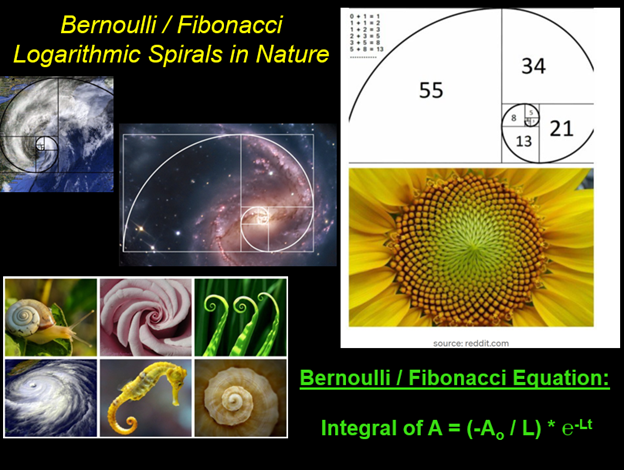
Figure 4. Comparison between start times and durations of Days 1-6 of the Time Dilation model (upper plot) versus historical observations from the Old Earth model (second plot).
